

As a teenager, getting a pimple was world-ending. On the days I woke up with a seismic cyst, I had no clue what to do. My mom—try as she might—was no help thanks to her perfect skin privilege. But then the golden age of television—Proactiv commercials—kicked up, and so I made it my mission to get my hands on those healing salicylic potions. For reasons I will not explain, I was unsuccessful and got questionable tips from magazines and confused friends instead. Here’s something I learned the hard way: Never let a middle schooler convince you to pop your pimples and blood is definitely not a good sign after an especially spirited pimple popp-ing stretch.
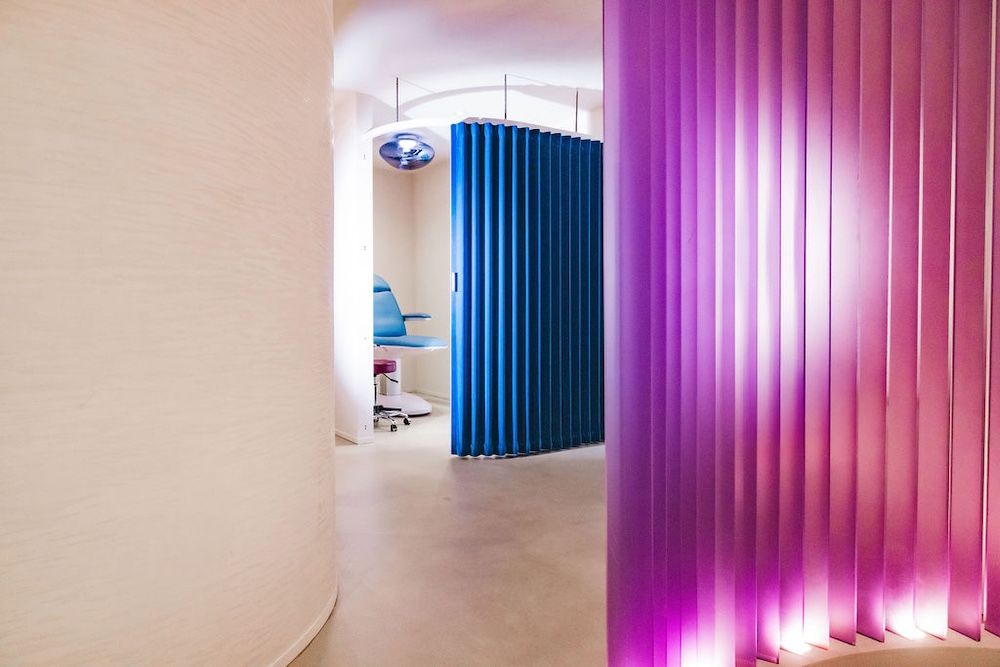
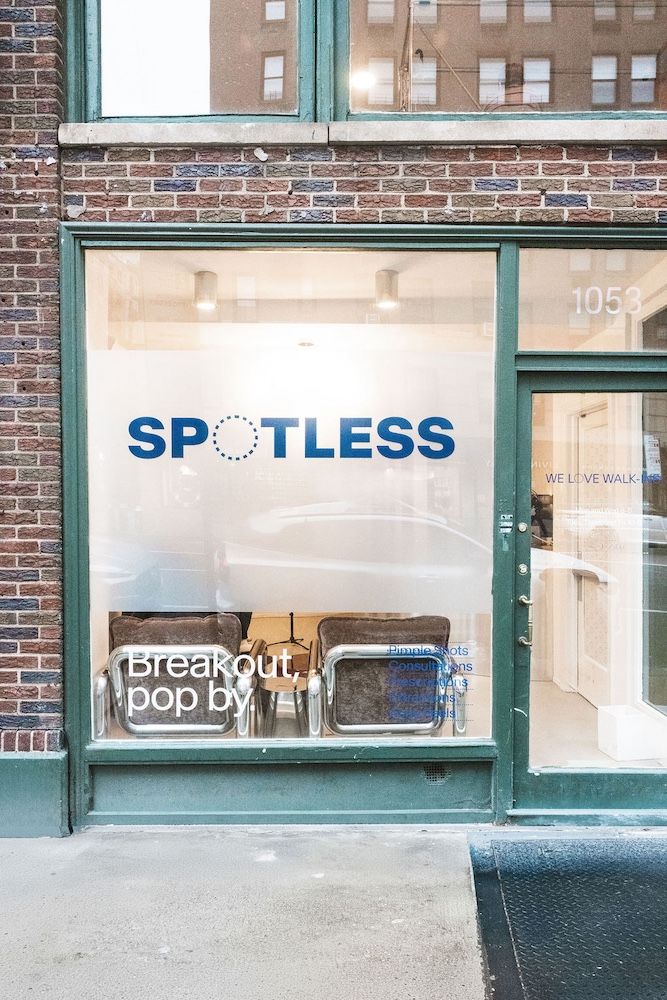
Teens—or adults—these days don’t have to suffer like I did. They have dedicated skincare lines, age-appropriate anti-acne facials, and as of November, Spotless on the Upper East Side. The acne clinic was founded by renowned dermatologist (and co-creator of the La Solution 10 De Chanel cream) Dr. Amy Wechsler, and her daughter, Zoe. Think of it as a derm office-meets-facial spa (the stuff of a skin expert’s dream), where breakouts, whiteheads, cysts—anything acne-related—is treated with everything from chemical peels to extractions to pimple shots and prescription meds. And all that comes without having to book a derm appointment (which is usually scheduled for way after you need it anyway), or paying for a full facial. I would’ve loved having something like this even a year ago, but growing up? I would’ve died for it.
I stopped by Spotless in December—it’s just a stone’s throw away from JG Melon, so you can deal with your pesky breakout and then grab a burger as a treat… or consolation. They have four treatment rooms operated by nurse practitioners who have been trained by Dr. Wechsler herself.
My breakout-prone skin has come a long way since I was a teenager, but I still deal with angry cysts close to my period. That was the first thing I told Betsy, my nurse practitioner, when we talked at length about my skin history, medications, and skincare routine. She examined my skin and determined that while I didn’t need any peels or injections this time around, I had some closed comedones on my neck—of all places—that she could extract. She sterilized the area, grabbed a lancet, and went to town. I’m one of those freaks who likes to see the extractions after it’s all done so this was exciting for me, especially because I would otherwise try to extract them myself—don’t do this, obviously.
Dr. Wechsler happened to be at the clinic when I was there so Betsy brought her up to date on my skin lore. I did a short round of Accutane during my freshman year of college. It was brutal: monthly blood exams to check my liver, shedding entire layers of skin like a snake, and incessant dryness. So when they recommended I go on a microdose of Accutane to curb my hormonal breakouts, I was apprehensive—and confused.
Turns out, this is what’s called a “Hollywood Dose”—a 10mg to 20mg weekly or semi-weekly dose named after its most fervent users to keep their skin clear. Dr. Wechsler has been doing this with her patients for decades. Because the dose is so low—compared to a full course, which for her patients usually averages 10 to 12 months—there are virtually no side effects, save for mildly dry lips in some cases. Some celebrities stay on the drug indefinitely; women typically only go off it when they’re trying to have a baby. Dr. Wechsler told me her breakout-prone dad is 82 years old and still takes 20mg of Accutane twice a week. (I thought one of the perks of aging was not having to deal with pimples anymore? Apparently not.)
A battery of lab tests comes before any dose, which meant that Betsy had to draw my blood. And while my mind was acclimating to the idea of Accutane once more, this is where my body pulled the brakes. Each time Betsy got anywhere near me with a needle, my body fell into near-fainting spells. We ultimately decided I would return in a month for the necessary labwork—after all, I still had to wait a month after agreeing to the iPLEDGE REMS safety program, which makes sure pregnancy-able people know the risks of isotretinoin, to begin the drug. The waiting period isn’t doing anything to quell my nerves for another blood draw, but that won’t stop me from marching into Spotless again so I can get my hands on the Accutane.
Accutane or no Accutane, I’ve had better and worse acne periods over the years, and because of that I think about my skin far more often than I’d like to admit. I know how horrible I felt when my skin was at its worst: embarrassed and self-conscious enough to avoid looking people in the eye because I was convinced my breakouts were all anyone could see. And, truthfully, I’ve also felt like I should know better, given my access to experts, products, and treatments.
Bodies change constantly, and I’m often waiting for the other shoe to drop—for my hormones to go haywire again and my skin to follow. But as Dr. Wechsler reassured me, acne is a chronic medical condition ruled by a combination of genetics, stress, and hormones, and not, as social media would have you believe, a bad diet or dehydration. Sometimes you just need a little more help. Mine just happens to come in the form of a gel capsule.
—Daise Bedolla
Photo via ITG