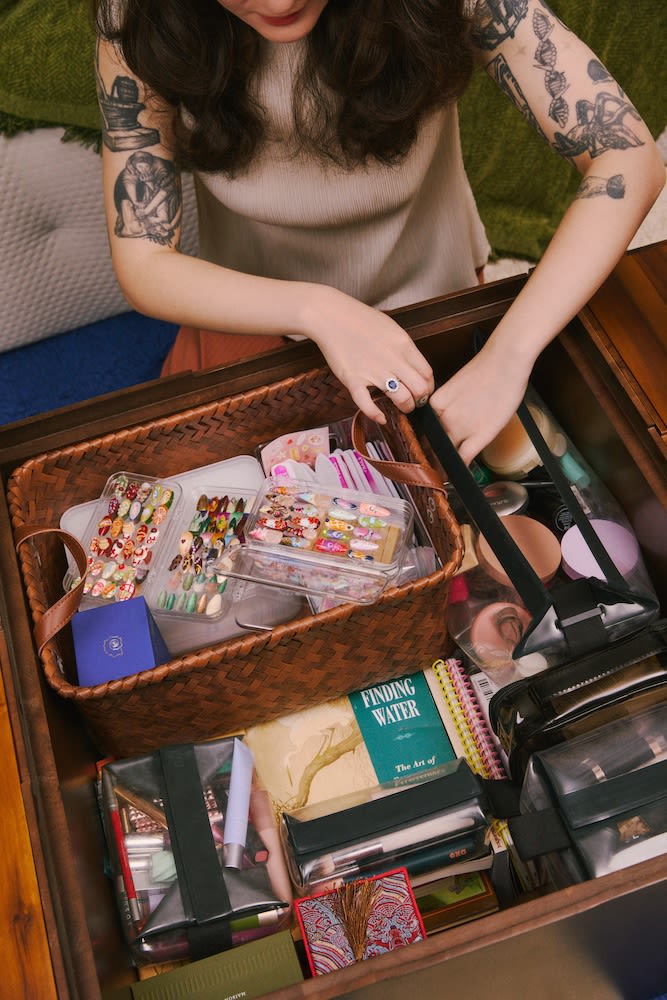
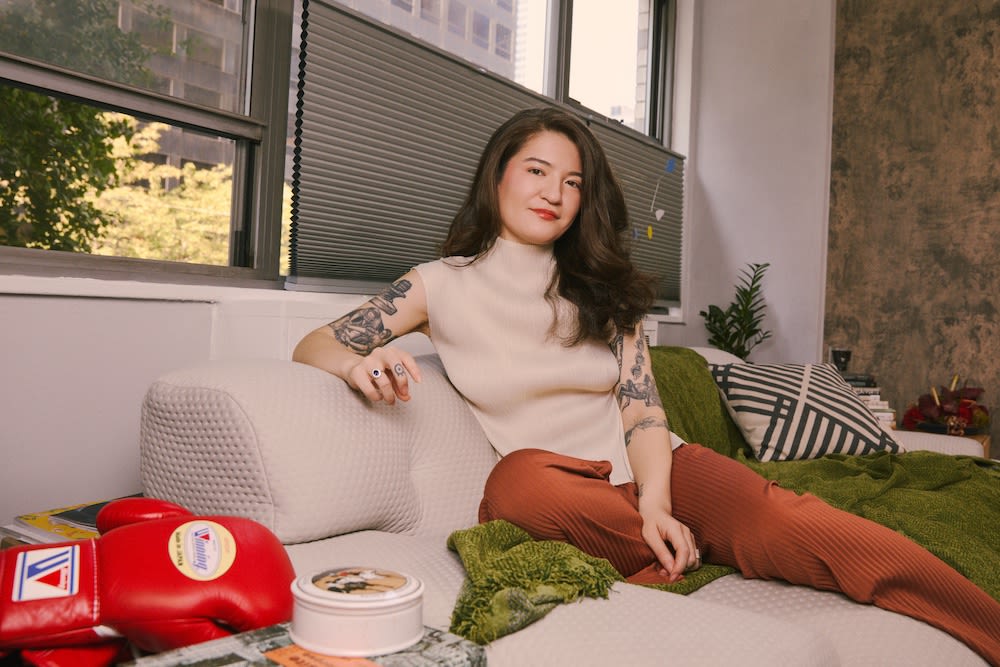
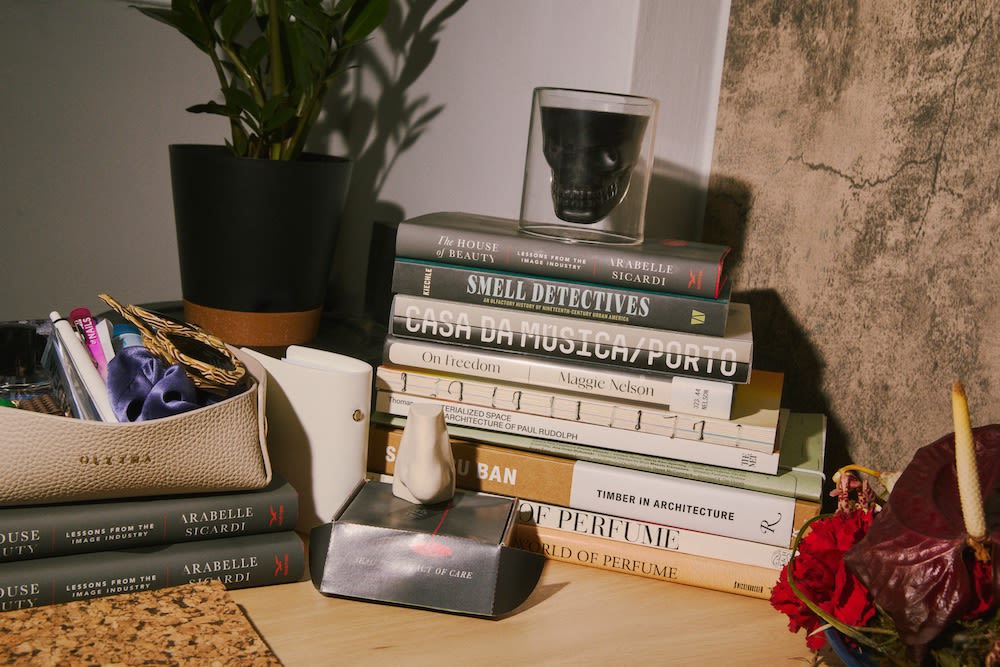



“I run a fragrance collective called Perfumed Pages, and I’m almost always working on several books. I wrote The House of Beauty: Lessons from the Image Industry because I wanted to tell the stories I was uniquely positioned to report, but what no media outlet in their right mind would let me write. The book revolves around the intersection of beauty and capitalism, political power, race, class, and gender, in a way that says the quiet part out loud. It looks directly at what we sacrifice in ourselves and in our relationships in order to feel more beautiful, however fleeting. It deals with pretty privilege and the undeniable way the world rewards certain kinds of faces. It examines how communities are both exploited and exploitative to make a quick buck. And it maps the global network of people, companies, and bad actors responsible for creating this churn of products that are designed to make us feel a little more in control.
When I worked in magazines full-time, I wanted to write about the hypocrisy within beauty—the way companies tell one region, ‘You’re beautiful as you are,’ while selling bleaching creams in another. My question was always: How can you tell women they’re perfect and also insist they can be improved? That didn’t go over well with my employer. It was a very different media landscape. I pitched freelance stories that editors wouldn’t even reject over email because of the paper trail. I once pitched Vice—a publication that literally interviewed cannibals—a piece about beauty industry bad actors. They held an all-hands meeting to discuss it, then called to reject it. It was five years ago, but the reaction told me everything.
Today, people talk about shade ranges and racism on TikTok; back then, you never addressed that publicly. Traditional magazines are used to presenting beauty with no friction. The moment you introduce reality—the messiness of being a person in America, or being non-white, or disabled, or simply not fitting into the narrow idea of womanhood—everyone gets touchy.

SKINCARE
I have acne-prone skin, and because I’m chronically ill, I recover more slowly, get puffy—just a whole host of things. I’ve been in remission for a while, so it’s not as bad as it once was, but my cheeks are like the pits of hell… almost. And honestly, the biggest changes in my skin have had very little to do with products and more to do with how I eat. Cutting down on sugar and drinking—even social drinking—made the biggest difference.
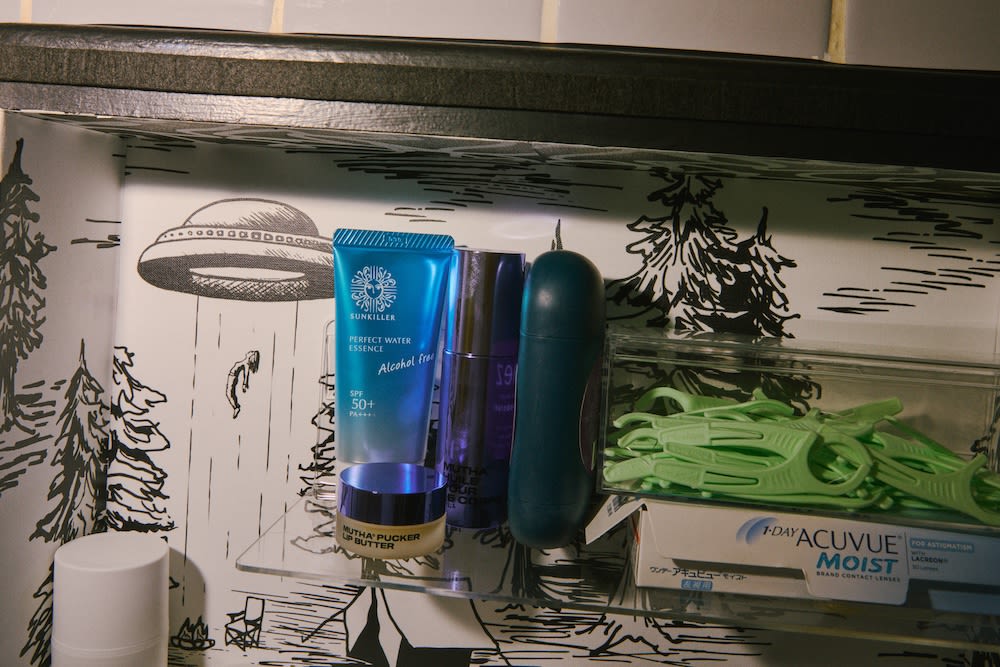
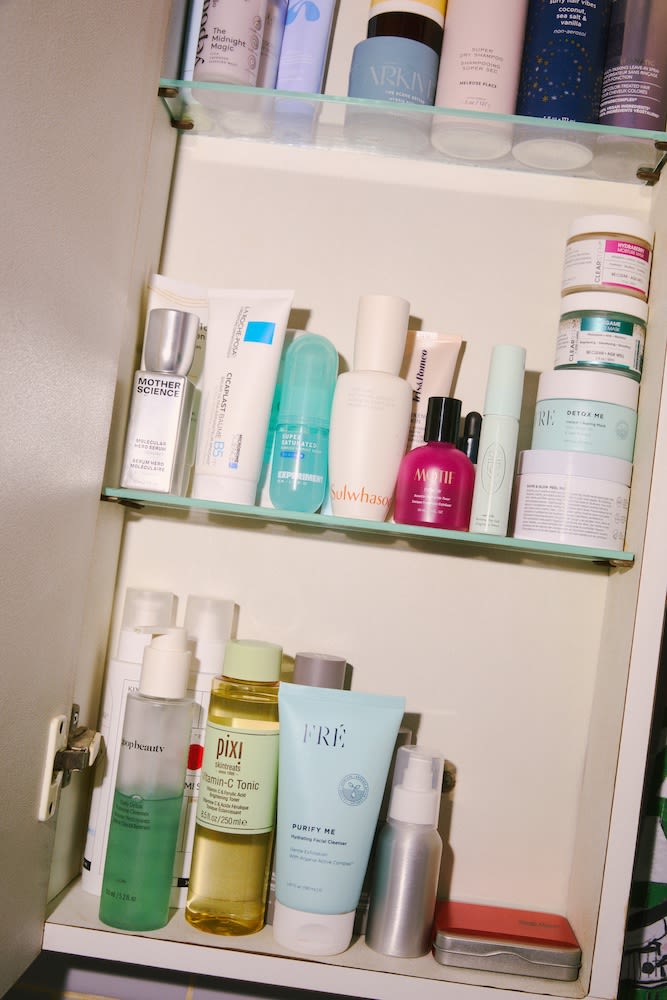
Instead of cleansing in the morning, I just mist with the S’able Labs Black Seed Toner, and then follow that with sunscreen. Canmake Mermaid Skin UV Gel and Isntree Watery Sun SPF are always in my bag. For my body, I use Black Girl Sunscreen SPF 30.
At night, I use a foaming cleanser—Fré’s Purify Me or Goop’s Daily Detox—and an oil-based one. The balm I’m testing right now is crap; you know when your skin never feels quite clean, like there’s a film? But I generally like the True Botanicals balm. Then toner: Motif’s resurfacing one is a great acid that doesn’t smell as wild as Biologique Recherche P50. Serum-wise, I’m using Sulwhasoo’s First Care Activating serum for sunspots and hyperpigmentation. I like Sulwhasoo formulations in general—the textures are lightweight. I find that some serums can be a little sticky or heavy, but this one just kind of disappears. Mother Science’s Molecular Hero serum also helps with pigmentation.

If I’m wearing makeup, I prep with Experiment’s Super Saturated. Otherwise, I wear La Roche-Posay Cicaplast Baume B5+ to bed. For my body, I use Jergens sometimes, but nothing beats L’Occitane’s ultra rich body cream. I love it because of the smell—it can’t be replicated. I’ve literally taken it to the Brooklyn apothecaries that make products for you, and it’s never quite the same. I use Trader Joe’s cacay oil body butter as a hand and foot cream, too.
I don’t use sheet masks anymore—reporting on the lack of sustainability in one-time use products guilted me out of them a few years ago. So now I only use Fré’s Detox Me mask. If I wake up looking like a raccoon, I’ll use Dieux’s Forever eye masks with their Auracle eye cream—I keep one set in the fridge and one in the bathroom—or I’ll just layer on a face serum. I also keep stacks of The Klog’s pimple patches in my vanity. I’ve tried every pimple patch known to man, probably, and those are still the best.
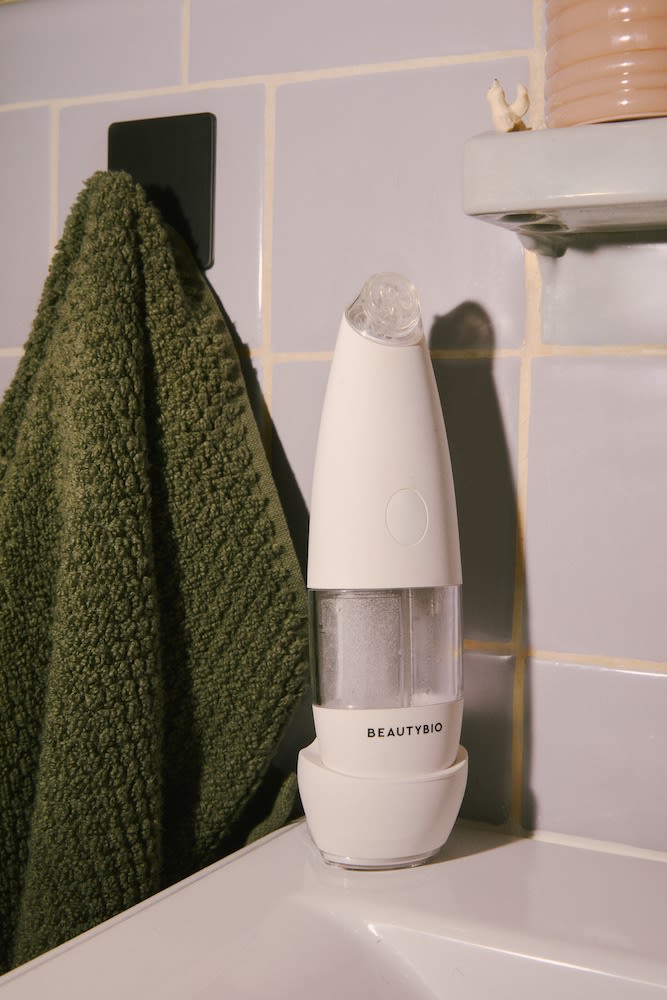
I love a skincare device and an experimental treatment. I would get Fraxel again in a heartbeat if it were more accessible in the US. In Hong Kong you can get a whole package of Fraxel, microneedling, PRP, Hydrafacial, and more for $150—depressing. Fraxel and Pico lasers are the only things that truly help my acne. Microneedling works for me, too, but the results fade faster. On the device front, BeautyBio’s Hydro-Infusion tool is great: You fill one chamber with their concentrate, add water to the rest, and it basically does a mini Hydrafacial at home. It’s obviously not as strong as a salon facial, but it’s perfect for touch-ups. It’s so satisfying—and also disgusting.
MAKEUP
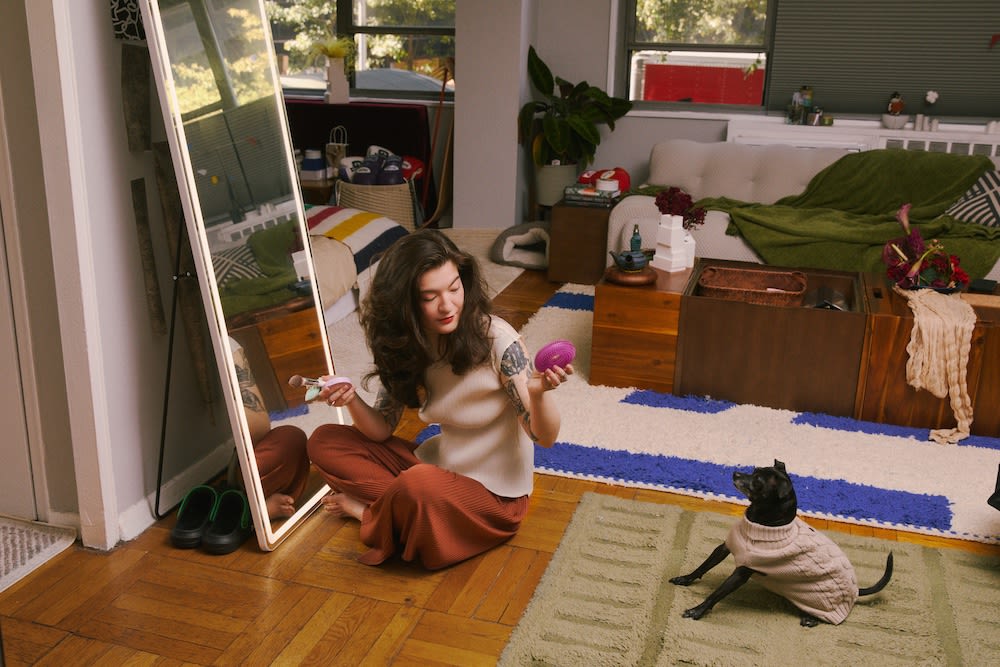
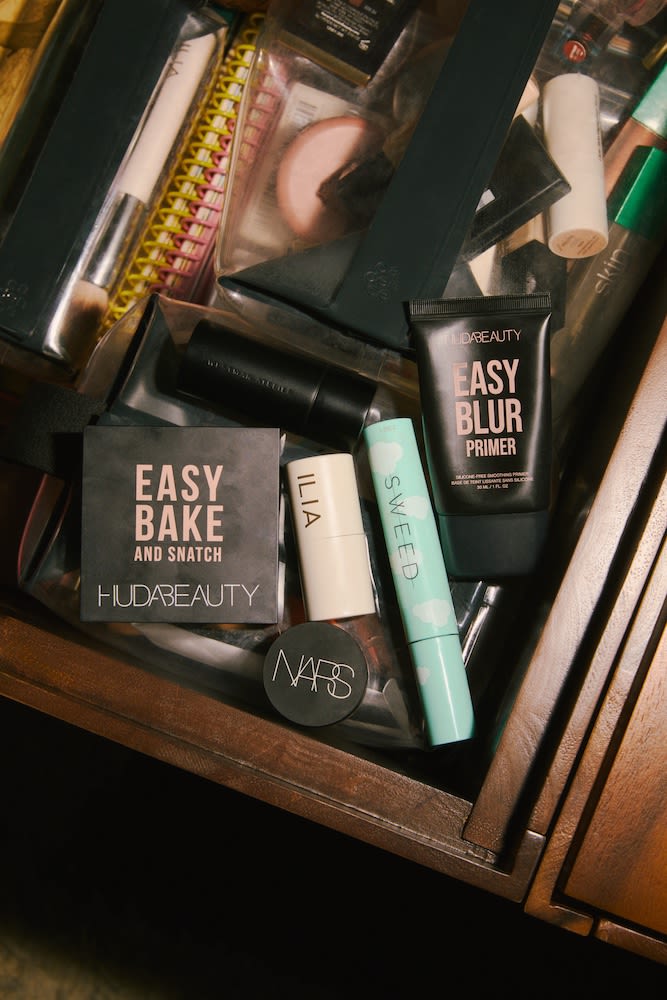
My makeup looks best when I take my time—color-correcting, layering, doing all sorts of things. I also shower and get ready at the gym every day, so everything has to fit in something slim. I’m testing different foundations right now. I went to Sephora and grabbed a bunch of samples of whatever the girlies are talking about—Patrick Ta Major Skin, Haus Labs Triclone Skin, the usual suspects. Before any of that, it’s either the E.l.f. Power Grip primer or Huda Beauty’s Easy Blur.
Then it’s on to NARS Soft Matte concealer—my favorite concealer of all time. The texture and shades work so beautifully for my skin. I was in a campaign for it years back—they gave me Cher-length hair extensions I still think about. Mascara-wise, I use Sweed’s Cloud. Sweed feels so under-the-radar, but all of the LA baddies with perfect skin seem to have it in their bags. Their Glass Skin foundation is supposed to be phenomenal, too.
After concealer, I go in with Huda Beauty’s blushes—I tend to use a random mix of three. To contour, I use Westman Atelier’s Face Trace stick, which is gorgeous and magnificent—Westman Atelier is one of those brands I’d buy out entirely if I ever had to rebuild my makeup collection from scratch. I set everything with the Huda Beauty brightening and setting powder and the LYS Skin Loyalty setting spray.
I get my brows tinted and threaded, so on a daily basis I only run Brow Lift from E.l.f. through them. I’m trying a bunch of different brow places, but right now, I’m going to BriskNPosh in Soho. Natalia does incredible correction work there. She was showing me some of her clients who had gone to unlicensed providers and ended up with jacked-up lashes, and the corrective work she does to make it look invisible is like a masterclass. I was like, ‘Oh, you’re Michelangelo actually.’

HAIR
I get unlimited blowouts through Licensed to Glow—this is its own experiment. While I was doing prep work for my book, I wanted a higher level of beauty maintenance. I don’t usually get a weekly blowout at Fabi Pro Beauty—that’s not who I am—but I started doing it partly because I read Lauren Santo Domingo’s Top Shelf, where she said she’s maybe blow-dried her hair three or four times in her life. That was wild to me. It haunted me. I don’t want to become her, but I did want to understand the effortlessness and frictionless nature of never having to do this one thing.
Last summer, after a lot of therapy, I realized I’d reached a point where I fully understood my own issues—what can’t be fixed by talking—and that the people who harmed me probably need therapy more than I do. So I moved my therapy budget into my blowout budget because at least I’ll look good while my issues remain unresolved. And yes, I discussed it with my therapist. She said, ‘Go forward, I’m proud of you.’ Viewer discretion is advised: I’m not saying everyone should replace therapy with a blowout, but it makes me happy. We’re allowed to find play and pleasure and see-saw the mechanics of our lives.
The other truth? I hate washing my hair. I have so much of it—every hairstylist comments on it, and some have even charged me extra. I use dry shampoo between appointments, but yes, I schedule my entire life around my gym schedule. If I swim on a certain day, I get a blowout on a certain day. It’s a system. It works.
NAILS
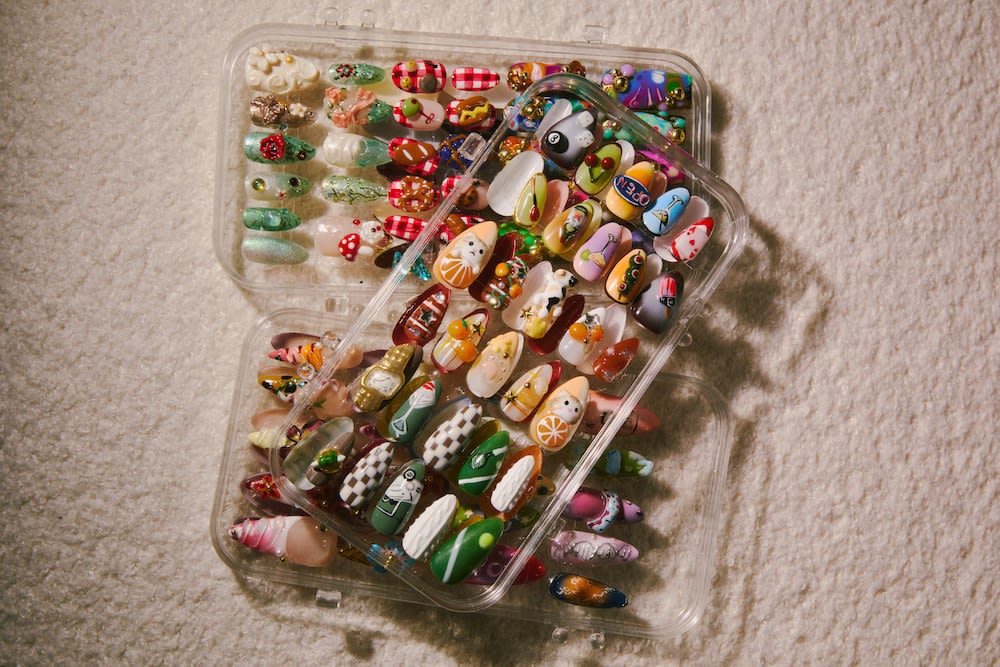
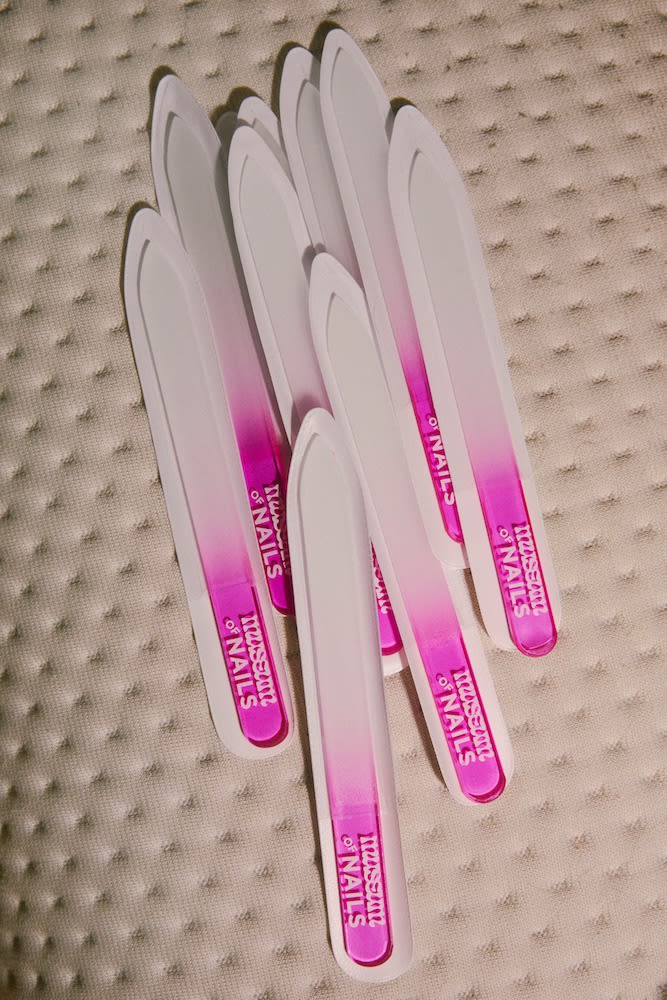
My Museum of Nails spun out of my House of Beauty research. I wanted to create an archive of nail history. I’d spent years interviewing nail artists around the world, including during the early COVID shutdowns, and I was struck by how surprised they were to be treated and interviewed as artists, rather than service providers. They would often end up being very emotional conversations because it was the first time they were taken seriously for craft.
When I asked about their wish lists, the same thing came up again and again, that there was no archive memorializing the innovations and trends that shaped the American nail industry. A lot of the first manicurists in America—at least Asian manicurists—were lawyers, or translators, or government officials in Vietnam before the war. They had no interest in the classes offered in the camps until Tippi Hedren visited and her nails caught their eye. What’s remarkable about the Asian nail story is that these women had the capacity to organize and campaign for access to licensure, education, and financial backing to become nail techs in America. They literally broke down barriers.

On a personal level, I love seeing Gabie when I’m in LA. She was headed to NASA’s Jet Propulsion Lab before COVID derailed everything. Instead of starting over, she chose nails because she loves taking care of people, and she doesn’t regret it. LA has incredible salons like Clique, which hosts workshops and even has a to-go nail bar—you can get press-ons like you’re at a Dunkin’ Donuts drive-through.
I gravitate toward places that celebrate individual artistry, not fast-paced in-and-out environments. I understand why people love the convenience, but that’s not what nail art is to me. I want to talk to the artist and see how things get made, if people are being treated well, if they like the circumstances in which they get to create, if the job has offered them a sense of self-worth and purpose. These are the things of luxury to me.
There are great salons in New York too, like 10 Piece and Vanity Projects, but I really just enjoy going to an at-home nail tech now. I go to my girl Kesang Gurung. She works some days at Chillhouse. She was the main girl behind all the Chillhouse manis for years. She only works on natural nails, and she keeps mine healthy and beautifully long—and she’s brilliant at design. Love her—five stars.
FRAGRANCE
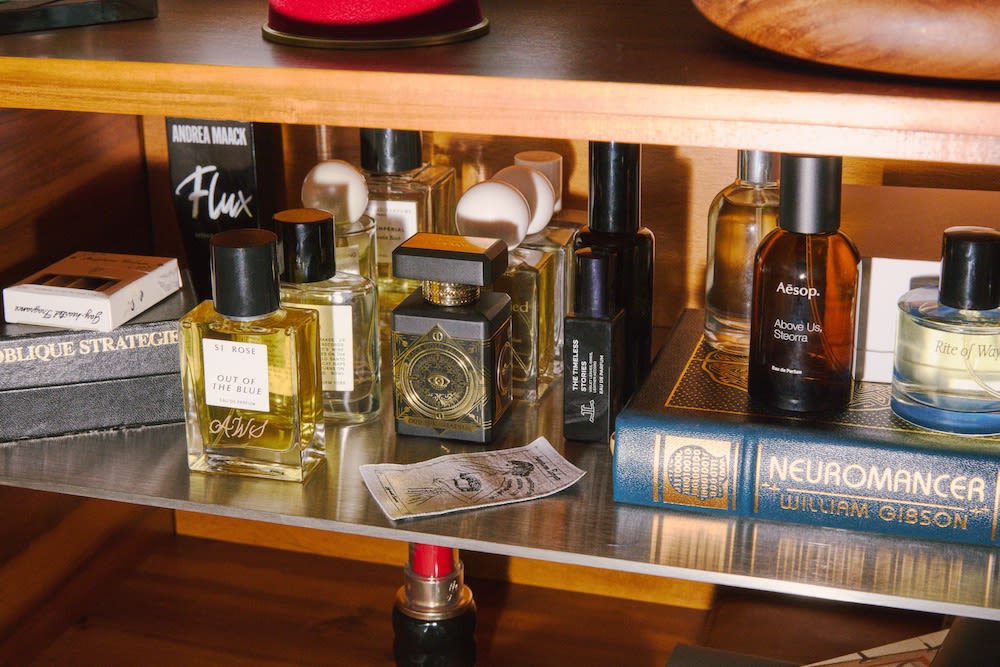
Anyone who knows me knows I’m a frag-head. I always have fun writing about scent or hosting events through Perfumed Pages. Last summer, I ran a Summer Salon with weekly writing workshops that used fragrances as creative prompts, plus field trips to perfume studios and shops.
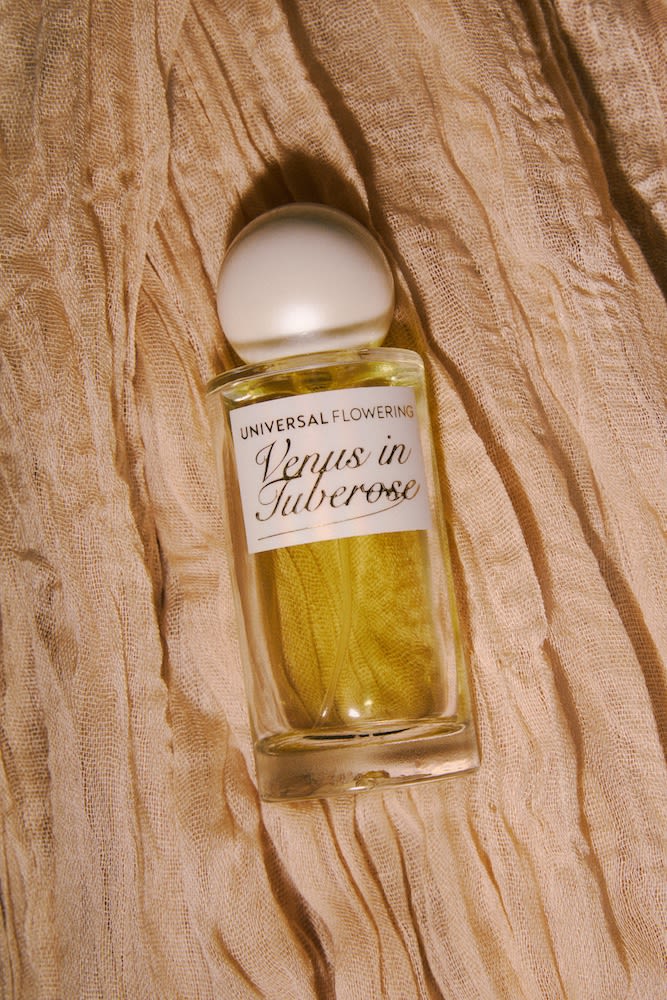
My wedding fragrance was actually a group purchase from the Summer Salon participants. Everyone fell in love with Venus in Tuberose by Universal Flowering, so we bought a bottle to share. I wore my portion on my wedding day as a way to bring more love into the room. Our guests all received a bottle of Gucci Beauty’s Tears from the Moon, because my wife and I met on a blind date at a Gucci party.
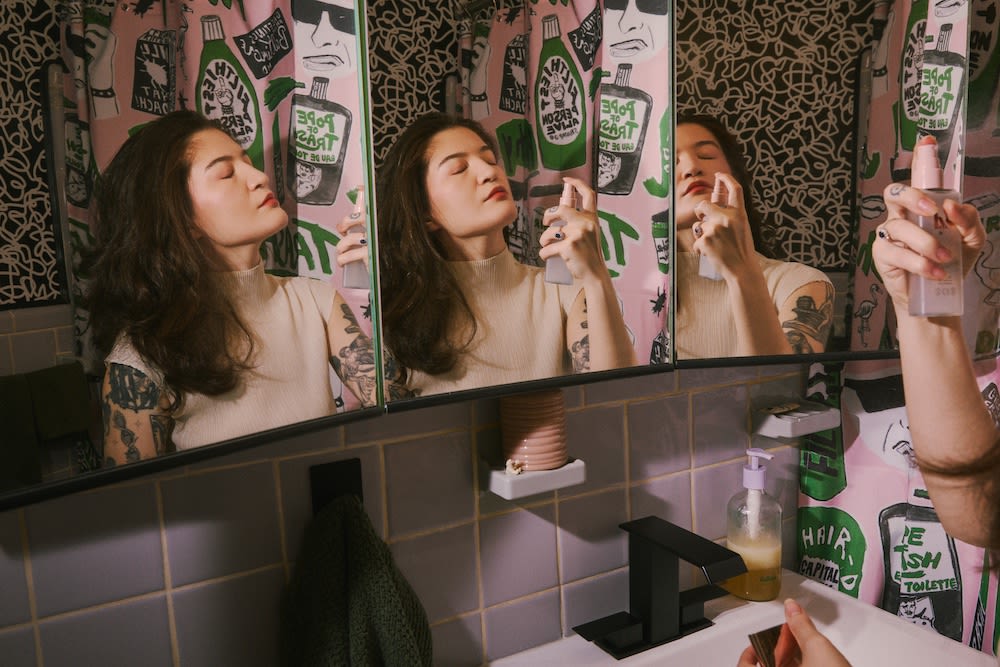
Every other year, I judge fragrances for the Institute for Art and Olfaction, an independent nonprofit dedicated to perfume and olfactionary art. That means I blind-smell hundreds of fragrances. I don’t have a true ‘signature,’ but I do have a beloved roster. Apocalypstick by Mad et Len is one of them. It smells very much like me: roses and concrete. I love how moody and bitchy and romantic it is.
I’d love to create a perfume, but it’s expensive, and I wouldn’t want to do it quickly or cheaply. And if I were to do it, the fragrance would be for me. I want to resist the urge to commodify and girlboss every aspect of my pleasures.”
—as told to Daise Bedolla
Photographed by Shana Trajanoska in New York on September 15, 2025